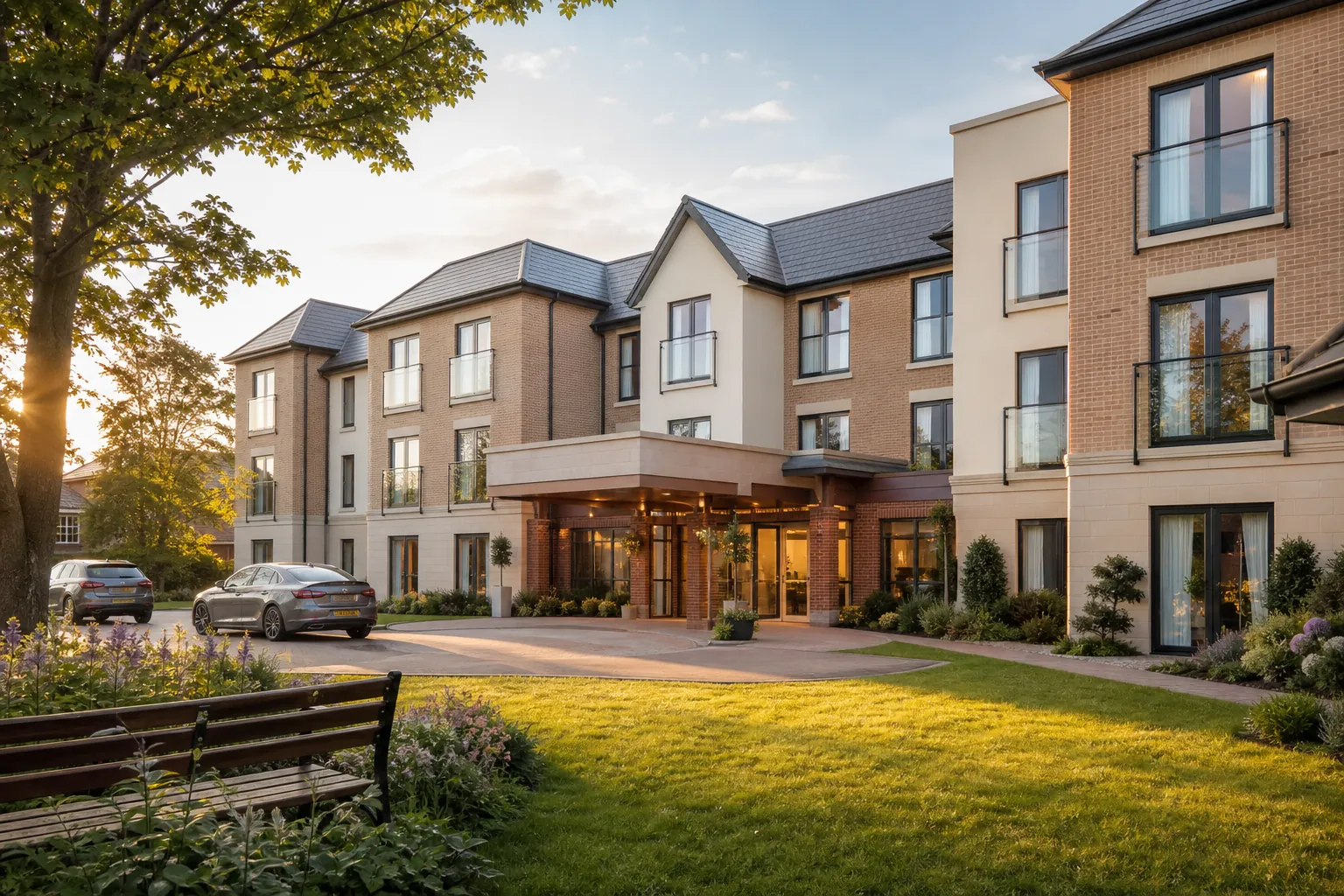
Development finance for care and supported living
We arrange funding for ground-up care and supported living builds, conversions of existing buildings and phased schemes.

Funding a care or supported living build or conversion
Care and supported living development finance is a short-term facility that funds the construction of a new care home, extra care or supported living scheme, or the conversion of an existing building into one. It is sized against the cost of the project and the value of the finished scheme, and the money is released in stages as the works progress rather than as a single advance. We arrange these facilities with development lenders, healthcare specialists and debt funds who understand the sector, including the part generalist funders miss: a care or supported living scheme is worth most when it is pre-let or forward-funded to a registered provider or trading at mature occupancy, so the exit must be planned around that, not just around practical completion.
Lenders typically advance up to 65 to 70 percent of total cost and up to around 60 percent of the gross development value of the completed scheme, taking the lower of the two, with rates from around 8 percent and interest rolled into the facility so nothing is paid during the build. The developer's equity, sometimes topped up with mezzanine finance higher in the capital stack, funds the balance. The demand thesis is strong: 179,600 to 388,100 units of additional supported housing are estimated to be needed on National Housing Federation supported housing research, and the over-85 population is projected to reach around 3.0 million by mid-2043 on Office for National Statistics, national population projections. A scheme with the right planning consent, a pre-let or forward-funding agreement and an experienced delivery team earns the keenest terms. We size the facility, stress the cash flow and line up the exit before you commit to the land.
Key features
- Funds ground-up care, extra care and supported living builds and conversions
- Sized on loan to cost and loan to gross development value, taking the lower
- Staged drawdowns released against a monitoring surveyor's certificates
- Strongest terms where the scheme is pre-let or forward-funded to a registered provider
Indicative terms
- Loan size£500k to £25m+ (indicative)
- Loan to costUp to 65 to 70%
- Loan to GDVUp to around 60%
- Term18 to 36 months
- RateFrom around 8% (scheme dependent)
- Arrangement feeTypically 1 to 2%
Indicative only. Terms vary by lender, scheme and borrower and are not an offer of finance.
Who it suits
- Developers building care homes, extra care or supported living from the ground up
- Investors converting residential, hotel or institutional buildings into care or supported living
- Operators and registered providers forward-funding a scheme pre-let on a long lease
Useful calculators
Related guides
Discuss care and supported living development finance
A view on fundability within one working day.
How much will a development lender advance?
A care or supported living development facility is sized against two ceilings at once: up to around 65 to 70 percent of total project cost, covering land, build and fit-out, and up to around 60 percent of the gross development value of the finished scheme. The facility takes whichever figure is lower, and the developer funds the balance in equity, with loans available from around 500,000 pounds to many millions.
Where the gap between the lender's advance and the equity you want to commit is too wide, mezzanine finance can sit behind the senior loan in the capital stack and lift total leverage, at a higher price. The valuation question matters here too. A pre-let or forward-funded scheme is valued on the agreed institutional or registered-provider commitment, which supports a higher and more certain gross development value than a speculative build. A trading care scheme is valued on its projected stabilised going-concern value. We instruct the valuation to reflect the exit you are actually pursuing.
How are funds drawn down during the build?
Development money is released in stages, not as one lump sum. The lender appoints a monitoring surveyor who inspects the site, checks the work completed against the cost plan and certifies each stage before the next drawdown is advanced. You only pay interest on the funds actually drawn, and the interest itself is rolled into the facility rather than serviced monthly, so the project carries no payment burden while it has no income.
Care and supported living schemes can often be phased. A larger extra care or supported living scheme can be built and let in blocks, with a registered provider taking units in tranches as they complete, or a care home opened and its occupancy built floor by floor. Structured well, the development facility funds the build and the early phase, and the agreed pre-let or the scheme's own income contributes to later phases, reducing peak debt. We structure drawdowns around that phasing from the start.
What does a lender want to see in the appraisal?
A care or supported living development lender underwrites the scheme, the demand and the team. It wants the full cost plan and build programme, planning consent for the intended care or residential use, and evidence of demand: for a care home, a catchment study, the local-authority and private-pay fee picture and competing supply; for supported living, a pre-let, forward-funding agreement or heads of terms with a registered provider, and the regulatory standing of that provider. The revenue projection should be built bottom-up from the bed numbers or the unit mix, not asserted as a single occupancy figure.
The team is weighed alongside the numbers. A developer or operator who has delivered and run care or supported living before is a materially better credit than a first-time entrant, though first-timers can strengthen a case with an experienced contractor, a recognised operator or registered provider lined up, and a management or lease agreement in place for opening. We shape the appraisal pack so it answers the credit committee's questions before they are asked, which shows in the terms offered.
How does the loan get repaid once the scheme completes?
The exit depends on the scheme type. A supported living or extra care scheme pre-let or forward-funded to a registered provider exits cleanly on completion: the provider's lease is signed, the scheme is sold to a forward-funding institution, or it is refinanced onto a term investment mortgage against the capitalised lease income. A trading care home exits onto a term commercial mortgage once it is registered and occupancy has built to a level that supports the going-concern value, or by sale to an operator, investor or REIT.
Either way, the lender wants the exit named and evidenced in the appraisal, and the term of the facility, normally 18 to 36 months, must cover the build plus contingency and any lease-up the exit depends on. We arrange the next stage of debt, or confirm the forward-funding or pre-let, in parallel so the development loan never reaches maturity without its successor agreed. Where the exit is a sale to an institution, we evidence the buyer appetite, supported by sector liquidity: forecast healthcare transactions reached around £12bn for 2025 on Knight Frank, UK Healthcare.
Can you fund a conversion or a change of use?
Yes, and conversions are a large share of the UK pipeline. Taking an existing residential, hotel, office or institutional building and converting it to a care home or supported living is often faster and cheaper than ground-up construction, and the same staged facility funds the acquisition where needed, the structural works, the adaptations for care use and the fit-out. Planning for the change of use and meeting CQC and building standards are key gating items, and we can fund the pre-planning hold with a bridge where the timeline demands it.
Pure refurbishment funding is also available for operators who already control a building, financing the works that bring a tired home back to a good CQC rating or reconfigure rooms to modern standards and add lettable capacity. Because that spend converts into beds or units and therefore income, lenders can assess it against the incremental cash flow or lease value it creates. For a trading home, that expansion is often funded more cheaply by refinancing onto a larger term mortgage, and we will tell you when that is the better route.
Worked example: forward-funded supported living conversion
Consider a developer converting a large vacant building into a 12 unit supported living scheme, pre-let on a 25 year, index-linked lease to a registered provider. The site costs 1.5 million pounds and the conversion and fit-out cost 2.5 million pounds, so total project cost is 4 million pounds. On the agreed lease the completed scheme is appraised at a gross development value of 5.8 million pounds. The lender offers 65 percent of cost, 2.6 million pounds, which sits within its 60 percent of value ceiling, and the developer funds 1.4 million pounds of equity.
On an indicative rate of 8.5 percent over a 24 month term, drawdowns are released in stages against the monitoring surveyor's certificates and interest rolls into the facility. On completion the registered provider's lease commences, and the scheme refinances onto a term investment mortgage at 72 percent of the lease-based value, repaying the development facility and returning much of the developer's equity. The developer holds a long-leased, index-linked supported living investment.
This is illustrative only. The advance, rate, term and exit depend on the scheme, the costings, the pre-let and the developer, and any figures here are not an offer of finance.
Illustrative worked example only. Figures vary by lender, asset and borrower and are not an offer of finance.
Care and supported living development finance: common questions
What are care home development finance rates?
Indicatively from around 8 percent, with an arrangement fee of 1 to 2 percent, monitoring costs and sometimes an exit fee. Pricing moves with leverage, the strength of the demand evidence or pre-let, and the team's track record. Interest is rolled into the facility during the build, so we model the total accrued cost over the term rather than a headline rate alone.
Does a pre-let or forward-funding agreement help the finance?
Significantly. A pre-let or forward-funding agreement with a registered provider or an institution gives the lender a contracted exit and a more certain gross development value, which usually means higher leverage, finer pricing and a smoother credit process. Speculative schemes are financeable too, but they carry more equity and a closer look at the demand evidence. We structure the appraisal around whichever exit you are pursuing.
Is converting a building cheaper than building from scratch?
Usually, where a suitable building exists. A conversion avoids groundworks and most of the structure, completes faster, and lets income start sooner, though planning consent for the change of use, CQC standards and any structural surprises need managing. Lenders fund both routes on the same staged basis, sized on cost and the finished scheme's value.
Can mezzanine finance sit alongside the development loan?
Yes. Mezzanine finance sits behind the senior facility in the capital stack and can lift total funding above the senior lender's loan to cost ceiling, reducing the equity you need to commit. It costs more than senior debt and both lenders must approve the structure, so we arrange the two together rather than bolting one on late.
Is development finance regulated?
Development lending to a company or experienced commercial borrower for a care or supported living scheme is normally unregulated business lending. Where a case involves an individual or an owner-occupier and falls within the regulated mortgage definition, we refer it to an appropriately authorised firm.
Discuss care and supported living development finance
Send us your scheme and we will come back with a view on fundability and likely terms within one working day.