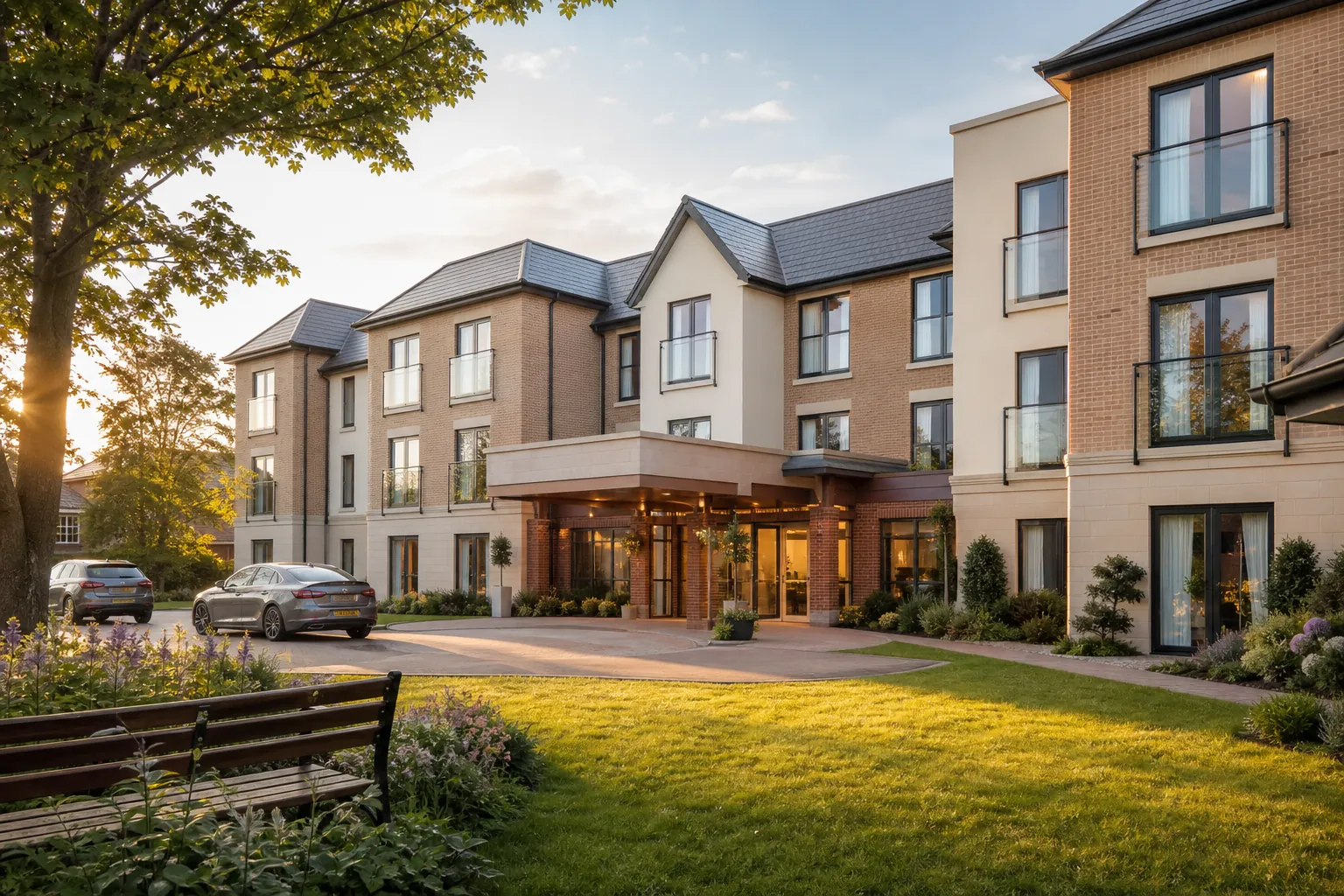
Converting a property to supported living
Converting a property to supported living means taking an existing building, often a house, a former care home or a larger residential property, and adapting it
Converting a property to supported living means taking an existing building, often a house, a former care home or a larger residential property, and adapting it so it can be let to a registered provider and used to house and support vulnerable adults. It is one of the most common routes into supported housing investment, because it turns ordinary residential stock into a specialist asset that can carry a long, index-linked lease.
This guide explains which buildings suit conversion, the works involved, the planning and use class questions, how the provider relationship is set up, and how the conversion is financed. We arrange finance for conversions as a broker and introducer. We are not a lender, and nothing here is investment, tax or legal advice.
Which properties suit conversion to supported living?
The most suitable buildings depend on the support need being served. For supported housing serving people with learning disabilities, autism or mental health needs, larger houses and former care homes convert well into shared homes or small clusters of self-contained units with communal and staff space. For people with physical disabilities, ground-floor or single-storey accommodation and buildings that can take wheelchair access and wet rooms are preferred. Former care homes, redundant institutional buildings and large houses in multiple occupation are all common conversion candidates.
Location matters as much as the building. A property needs to be where the local authority and registered providers actually have demand, with reasonable access to transport, services and community, because a perfectly converted building in the wrong place will not be commissioned. Before committing to a conversion, an investor should understand the demand in the area and ideally have a provider interested, because the provider's requirements shape the specification.
What works does a conversion involve?
The scope depends on the support need, but conversions typically involve reconfiguring the layout to create the right mix of private and communal space, installing or upgrading bathrooms and kitchens, and adapting the building for accessibility with features such as level access, wider doorways, wet rooms, hoists and assistive technology. Fire safety is a major element: supported housing for vulnerable people demands robust fire compartmentation, alarms and means of escape, often to a higher standard than ordinary residential.
On top of the physical works sit the standards the provider and any regulator require. A scheme where care is a regulated activity must meet Care Quality Commission expectations, and the provider will have its own specification for the property. The practical lesson is to agree the specification with the intended provider before starting work, so the finished building is exactly what they will take on a lease, rather than a conversion that then needs reworking. Getting this wrong is one of the most common and expensive mistakes in supported housing conversion.
What planning and use class issues arise?
Conversion to supported living can raise change of use questions, and the answer depends on the building and the support model. Some supported living arrangements remain within the C3 dwellinghouse use class, particularly where a small number of people live together as a household with support. Others, especially larger schemes or those with significant care, may fall into C2 residential institutions or be treated as sui generis, and a supported housing house in multiple occupation may need its own consent and licensing.
Getting the use class right is fundamental, because it affects whether planning permission is needed, what conditions apply and how the finished asset is valued and financed. We cover the use classes in detail in our dedicated guide. The safe approach is to establish the planning position before starting, take advice where the position is unclear, and treat any required change of use as a workstream to be resolved rather than an afterthought, because a lender will want the planning settled before funding the conversion in full.
How is the provider relationship set up?
A supported living conversion only becomes an investment once a registered provider agrees to take a lease of the finished building. The provider is the counterparty whose covenant the investor and the lender rely on, so engaging one early is central to the project. The provider confirms the specification, the support model and the demand, and ultimately signs the long, index-linked, full repairing and insuring lease that turns the converted building into an income-producing asset.
Ideally a provider is lined up before the conversion completes, and best of all before it starts, because a pre-let removes the biggest uncertainty in the whole project: whether the finished building can be let at all. Investors should check the provider's financial strength and its standing with the Regulator of Social Housing, because that covenant is what the income rests on, and the Regulator has judged a number of lease-based providers non-compliant on viability. Taking legal advice on the lease is essential before committing.
How is a supported living conversion financed?
A conversion is usually financed in two phases. The first phase funds the purchase and the works, typically with bridging finance or a light development or refurbishment facility, because the building is not yet in a fundable, income-producing state. This short-term debt carries the conversion risk and is priced for it. The second phase, once the works are complete and a provider lease is in place, refinances onto a long-term commercial mortgage or investment loan at a keener rate, serviced from the provider's rent.
The whole journey should be planned as a single sequence: a bridge to buy and convert, then a term loan to hold the leased asset. The term refinance is the exit that repays the bridge, so it should be understood, and ideally agreed in principle, before the bridge is drawn. We arrange both legs together, the conversion funding and the term debt that exits it, so the route from ordinary building to leased supported living asset is mapped and priced from the start. We act as a broker and introducer, not a lender.
Converting a property to supported living: common questions
Can you convert a house into supported living?
Yes. Larger houses and former care homes are common conversion candidates for supported housing, adapted into shared homes or clusters of self-contained units with the accessibility, fire safety and communal space a registered provider requires. The key is to agree the specification with the intended provider, settle the planning and use class position, and confirm local demand before committing. We arrange the finance for the purchase, the works and the term refinance.
Do you need planning permission to convert to supported living?
It depends on the building and the support model. Some supported living remains within the C3 dwellinghouse use class, while larger schemes or those with significant care may fall into C2 or be treated as sui generis, and a supported housing HMO may need its own consent and licensing. Establish the planning position before starting, because a lender will want it settled before funding the conversion.
How long does a supported living conversion take?
It varies with the scope of works and the planning position, but a conversion runs through purchase, works, registration and signing the provider lease before it becomes an income-producing, term-financeable asset. The first phase is funded with bridging or light development finance and the asset is then refinanced onto a term loan. Lining up the provider early shortens the path to a let, income-producing building.
How is converting a property to supported living financed?
In two phases. Bridging or light development finance funds the purchase and the works, because the building is not yet income-producing, then a long-term commercial mortgage refinances it once the works are done and a registered-provider lease is in place. We arrange both legs together, with the term refinance planned as the exit before the bridge is drawn, as a broker and introducer, not a lender.
Ready to talk about a real deal?
Send us the deal and we will come back with a view on fundability and likely terms within one working day.