£1,298/week
Avg weekly fee (UK)
Funding for care homes, supported living and supported housing in Livingston: acquisition finance, commercial mortgages, bridging, development, mezzanine and long-term debt.
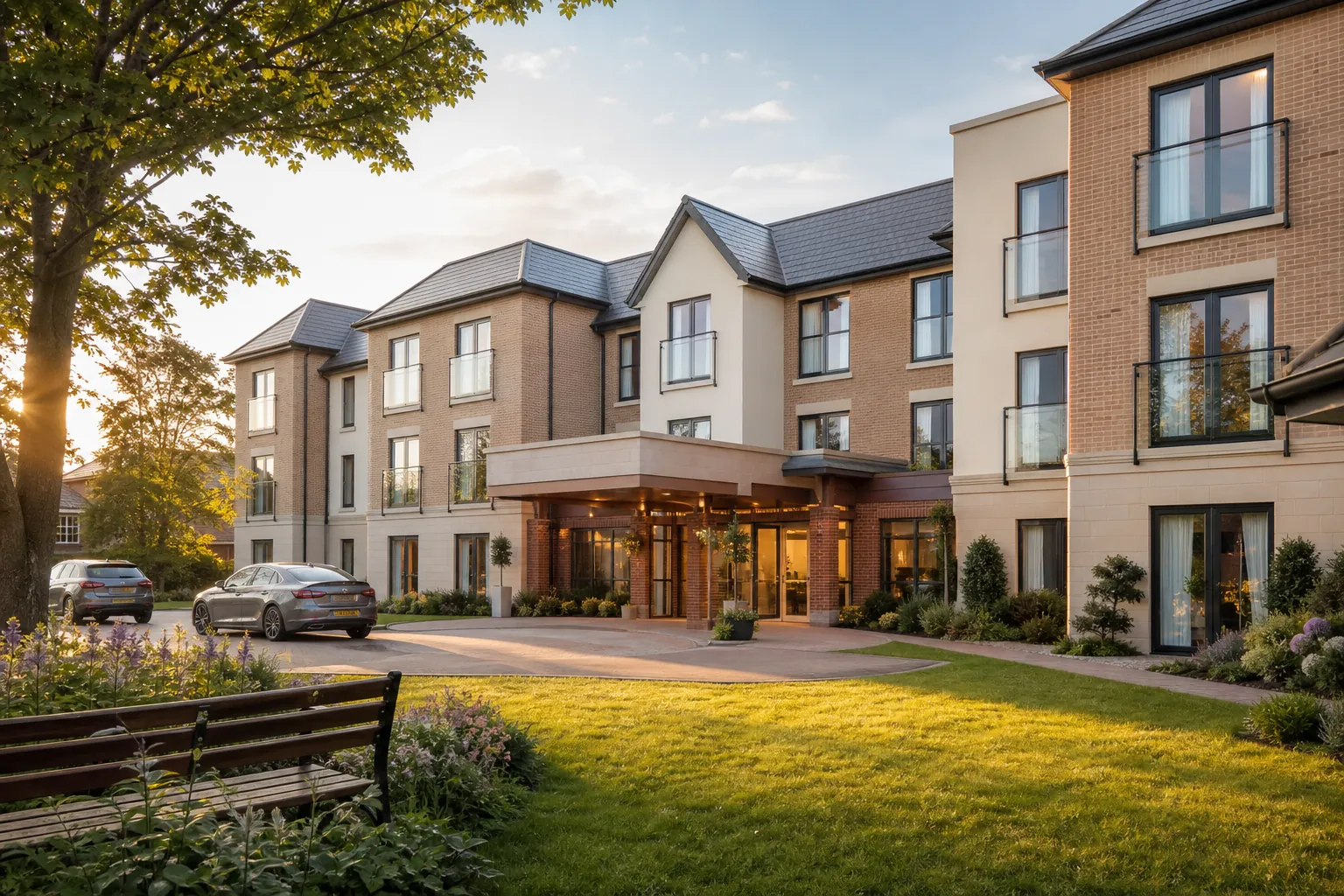
Livingston sits in Lothian, within the Scotland care and supported housing market. Assisted Living Finance arranges funding for supported living, care homes and supported housing across Lothian. We arrange acquisition finance, commercial mortgages, bridging, development finance, mezzanine and term debt on care homes, supported living and supported housing in Livingston, for investors, landlords, providers and operators, and place each deal with the lenders that genuinely back the sector.
Lenders underwrite a Livingston care or supported housing asset on its own fundamentals first, the lease and provider covenant for supported living, or the operator's trading income for a care home, then test it against the wider market. Average care home occupancy across the UK ran at 88.7% (Knight Frank UK Care Homes Trading Performance Review 2025, 2025), with average weekly fees of £1,298/week.
A commercial mortgage is the core way to buy or refinance a trading care home or a supported living investment in Livingston. We arrange acquisition finance for existing assets and term debt that holds them for the long run on 5 to 25 year terms. Supported housing let on a long, index-linked lease to a Care Quality Commission registered provider is underwritten on the lease and the provider covenant, typically to around 65 to 75 percent of value. A trading care home is different: there is no single lease, so the lender sizes the loan against the operator's EBITDARM, mature occupancy, fee mix and CQC rating, usually to around 65 to 70 percent of the going-concern value. Established owners can release equity as income grows, and first-time buyers can fund a purchase against the lease or the seller's accounts. We place each facility with the lender that prices Livingston care assets best across Lothian.
Each property type is underwritten differently. We arrange finance for specialist supported housing, supported living, residential care homes, nursing homes, extra care and retirement living, exempt accommodation and multi-asset care portfolios in Livingston and across Lothian. A block of supported living let to a registered provider on a 25 year lease and a trading nursing home running on local-authority and private fees are credit-assessed in very different ways, and knowing which lender backs each format is the work we do before a deal reaches credit. The structural demand sits behind all of them: the UK population aged 85 and over is projected to reach around 3.0 million by mid-2043 (Office for National Statistics, national population projections, by mid-2043), while care bed supply per head has been falling.
On a supported living investment in Livingston let to a registered provider, a commercial mortgage usually reaches around 65 to 75 percent of value on the strength of the lease, so you would budget for equity of roughly a quarter to a third of the price. On a trading care home the lender sizes against the going-concern value and the operator's earnings, typically to around 65 to 70 percent. New or repositioned schemes are funded on cost and business plan instead: bridging finance secures a site, an auction purchase or a conversion quickly, and development finance funds a build or change of use to around 65 to 70 percent of cost, with mezzanine topping the stack where the scheme supports it. Interest rates depend on the lender, the lease or covenant strength and the leverage, so we quote them deal by deal rather than as a headline rate. We size the right facility, rate and equity requirement for your Livingston deal.
Designated in 1962 as the fourth of Scotland's post-war new towns, Livingston straddles the River Almond and its combined town centre retail space now forms the largest indoor shopping location in Scotland. Livingston is served by M8 J3, M8 J3a and A71, the kind of road and transport access that matters for staffing a care setting and for families visiting a supported living scheme. Demand draws on neighbourhoods across the town, from Craigshill, Dedridge, Deans and Eliburn, each generating referrals into local care and supported housing. West Lothian is the local authority that commissions adult social care and supported living placements here, and that determines planning applications for care use, including Class C2 and supported-housing change of use.
The demand thesis behind care and supported housing is national and structural: the UK population aged 85 and over is projected to reach around 3.0 million by mid-2043 (Office for National Statistics, national population projections, by mid-2043), care bed provision has fallen to 26.7 beds per 100 people aged 85+ (Nuffield Trust, Care home bed availability, current), and the sector needs an estimated 179,600 to 388,100 units of additional supported housing (National Housing Federation supported housing research, to 2040s). That undersupply is what underpins occupancy and lease demand in Livingston as much as anywhere.
Location facts and Land Registry data. Market figures shown are national or Scotland-level, not Livingston-specific.
Livingston is a prime care and supported housing catchment within Scotland. A dense, ageing population, strong private-pay demand and active local-authority commissioning support both trading care homes and lease-backed supported living, and lenders compete hardest for stabilised assets and strong provider covenants here. Repositioning and development plays are funded on more cautious terms, with the scheme and the operator doing the work.
Glasgow and Edinburgh anchor the Scottish care market, with the central belt carrying the bulk of care home and supported living demand under a distinct regulatory regime.
Scotland's care market operates under its own regulation, with the Care Inspectorate registering services and free personal and nursing care supporting occupancy. Glasgow and Edinburgh carry the deepest demand, and an ageing central-belt population underpins care home and supported living need. Acquisition prices below the English south support keener yields for investors, and registered social landlords are active in supported housing. Lenders familiar with Scottish care underwrite the operator covenant and the regulatory position alongside the property.
Market commentary and figures for Scotland are drawn from Knight Frank (UK Care Homes Trading Performance Review, 2025).
Care and supported-housing market figures are published nationally or regionally, not per town, so the fees, occupancy and yields on this page are presented as context for a Livingston appraisal and attributed to their sources (Knight Frank UK Care Homes Trading Performance Review 2025; Knight Frank UK Living Sectors Yield Guide, September 2025). Town-level facts are different: transport access, the commissioning local authority are genuinely local and sourced. We do not publish a Livingston-specific fee or yield as if it were measured. Nationally there are around 16,500 care homes offering 465,000 beds (carehome.co.uk Care Home Stats 2025, 2025).
Yes. A care home in Livingston is financed with a commercial mortgage sized on the operator's trading income, and a supported living investment on the lease to a registered provider, rather than a residential loan. We arrange both for investors, landlords and operators, typically to around 65 to 75 percent of value, and place each one with a lender that backs the sector.
Most lenders advance around 65 to 75 percent on a Livingston supported living asset on a strong registered-provider lease, and around 65 to 70 percent on a trading care home on its going-concern value, so plan for equity of roughly a quarter to a third of the price plus costs. A stabilised asset with a long lease or clean accounts supports the top of the range; a repositioning play is funded on cost and business plan instead.
Rates depend on the lender, the lease or covenant strength and the leverage, so we quote them deal by deal rather than as a headline. Indicatively, term debt and commercial mortgages start from around 6 to 7 percent, development finance from around 8 percent and bridging from around 0.75 percent per month, with terms from months on a bridge to 25 years on a commercial mortgage. For market context, average UK care fees ran at £1,298/week (Knight Frank UK Care Homes Trading Performance Review 2025, 2025).
Yes. Conversions to supported housing or exempt accommodation are usually funded with bridging or development finance against the cost of works, then refinanced onto a commercial mortgage once the property is let to a provider or trading. Ground-up care schemes are funded on a development facility to around 65 to 70 percent of cost. The structural shortage of supported housing, an estimated 179,600 to 388,100 units of additional units (National Housing Federation supported housing research, to 2040s), drives demand for both routes, and we arrange them across Lothian.
Send us the outline and we will come back with a view on fundability and likely terms within one working day.