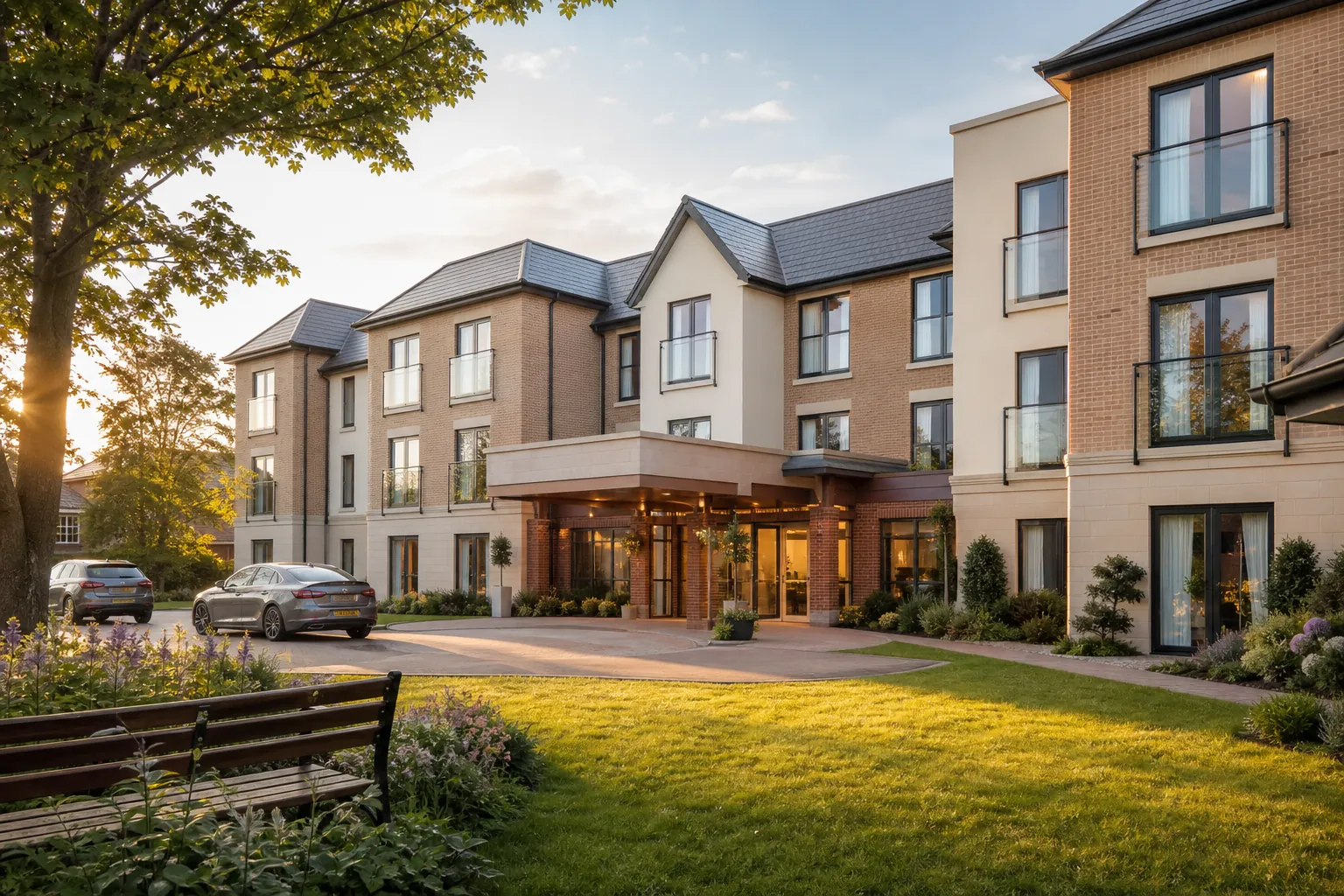
Care home mortgage deposits and loan to value
A care home mortgage deposit is the share of the purchase price a buyer funds from their own resources, with the lender funding the rest against the value of th

A care home mortgage deposit is the share of the purchase price a buyer funds from their own resources, with the lender funding the rest against the value of the home and its trading business. Because a care home is bought as a going concern, the deposit and the loan to value are driven by the strength of the operator and the trading income, not just by the building, which is what sets care home lending apart from a residential mortgage.
This guide explains how much deposit you actually need, how going-concern and bricks-and-mortar values differ, and how experience and trading history move the numbers. We arrange care home finance as a broker and introducer. We are not a lender, and nothing here is investment, tax or legal advice; figures are illustrative only.
How much deposit do you need for a care home?
In our experience arranging these loans, an established, well-occupied care home with a clean trading record typically gears to somewhere in the region of 60 to 70 percent loan to value, which means the buyer funds a deposit of roughly 30 to 40 percent of the price from their own resources. On a purely illustrative basis, a £4 million home at 65 percent loan to value implies a £2.6 million loan and a £1.4 million deposit, before stamp duty, fees and working capital.
That range is a starting point, not a rule. The actual loan to value depends on the trading history, the operator's experience, the Care Quality Commission rating, the fee mix and the quality of the building. A prime, mature home run by an experienced operator sits at the keener end; a weaker or turnaround home sits lower, requiring a larger deposit. The figures here are illustrations, not an offer of finance.
Why is care home loan to value lower than residential?
A residential buy-to-let might gear to 75 percent or more against a simple bricks-and-mortar value, but a care home is a trading business as well as a property, and businesses carry more risk than buildings. If occupancy falls, fees are squeezed or a Care Quality Commission rating drops, the income that services the loan can move quickly, so lenders build in more headroom by gearing lower against the going-concern value.
Lenders also keep one eye on the downside. They size the loan against the going-concern figure but check what the building would be worth as bricks and mortar if the business failed, because that is their security in a default. The gap between those two values is the value of the operating business, and the larger that gap, the more cautious the lender is on gearing. That is the structural reason care home deposits are larger than residential ones.
How does going-concern value differ from bricks-and-mortar?
Going-concern value, sometimes called the market value of the fully equipped operational entity, is the price of the home as a trading business: the property, the fit-out and the income stream together. Bricks-and-mortar value, or vacant possession value, is the price of the empty building alone, stripped of the trading business. For a well-occupied home the going-concern value is usually much higher, because years of building occupancy and reputation are embedded in it.
The deposit conversation lives in this gap. A lender will lend against the going-concern value but wants comfort that, if the worst happened, the bricks-and-mortar value covers a reasonable share of the loan. The indicative going-concern value for a modern, well-occupied, purpose-built home runs at around £100,000 to £150,000 per bed on Knight Frank and care market commentary, while the vacant building underneath is worth considerably less. A buyer who understands this split understands why the deposit is sized the way it is.
How does operator experience change the deposit?
Experience is one of the biggest levers on loan to value, because the lender is underwriting the management as much as the asset. An established care group with a track record of running homes to a good Care Quality Commission standard will usually secure keener gearing, and therefore a smaller deposit, than a first-time operator buying their first home, even on the same property. The lender is pricing the risk that the new operator cannot sustain the trading income.
First-time buyers are not shut out, but they should expect to fund a larger deposit and to present a strong business plan, relevant management experience, and ideally an experienced registered manager already in place. Bringing in an experienced operating partner, or buying a home with strong existing management that will stay on, can both improve the terms available. We help buyers package exactly this evidence before approaching lenders, which is often what moves the loan to value in their favour.
Can you reduce the deposit you need?
There are structural ways to reduce the day-one cash, though genuinely zero-deposit purchases are rare in this sector. Vendor support, where the seller leaves part of the price in as a deferred payment or loan, can reduce the cash a buyer needs at completion, and lenders may treat it as quasi-equity. Mezzanine finance can sit behind the senior loan to push total debt higher in exchange for a higher rate on that slice. Equity partners or a joint venture can bring deposit capital in return for a share of the deal.
Buyers with other property can also raise deposit funds against existing assets through a bridging loan or a refinance. Each of these layers adds cost and obligations, so the whole stack has to be modelled honestly against the home's cash flow. We arrange senior debt, mezzanine and equity introductions together, which lets a buyer see the full capital stack priced before committing. We act as a broker and introducer, not a lender.
Care home mortgage deposits and loan to value: common questions
How much deposit do I need to buy a care home?
In our experience an established, well-occupied care home typically gears to around 60 to 70 percent loan to value, so a buyer funds a deposit of roughly 30 to 40 percent of the price, plus stamp duty, fees and working capital. First-time operators and turnaround homes usually need a larger deposit. The exact figure depends on the trading record, the building and the buyer's experience, and is not an offer of finance.
What loan to value can you get on a care home?
Typically around 60 to 70 percent of the going-concern value for an established, well-occupied home with an experienced operator, in our experience. Weaker trading records, first-time operators and turnaround situations gear lower. Lenders size against the going-concern value but check the bricks-and-mortar value as their downside security, which is why care home gearing is lower than residential.
Why do care homes need a bigger deposit than houses?
Because a care home is a trading business as well as a property, and business income carries more risk than a building. If occupancy, fees or the Care Quality Commission rating fall, the income that services the loan can move quickly, so lenders gear lower against the going-concern value and check the lower bricks-and-mortar value as downside security. That extra caution shows up as a larger deposit.
Can a first-time operator buy a care home?
Yes, but expect a larger deposit and keener scrutiny, because the lender underwrites the management as well as the asset. A strong business plan, relevant experience, an experienced registered manager in place, or an experienced operating partner all help. Vendor support, mezzanine finance or an equity partner can reduce the day-one cash. We help package this evidence before approaching lenders.
Ready to talk about a real deal?
Send us the deal and we will come back with a view on fundability and likely terms within one working day.